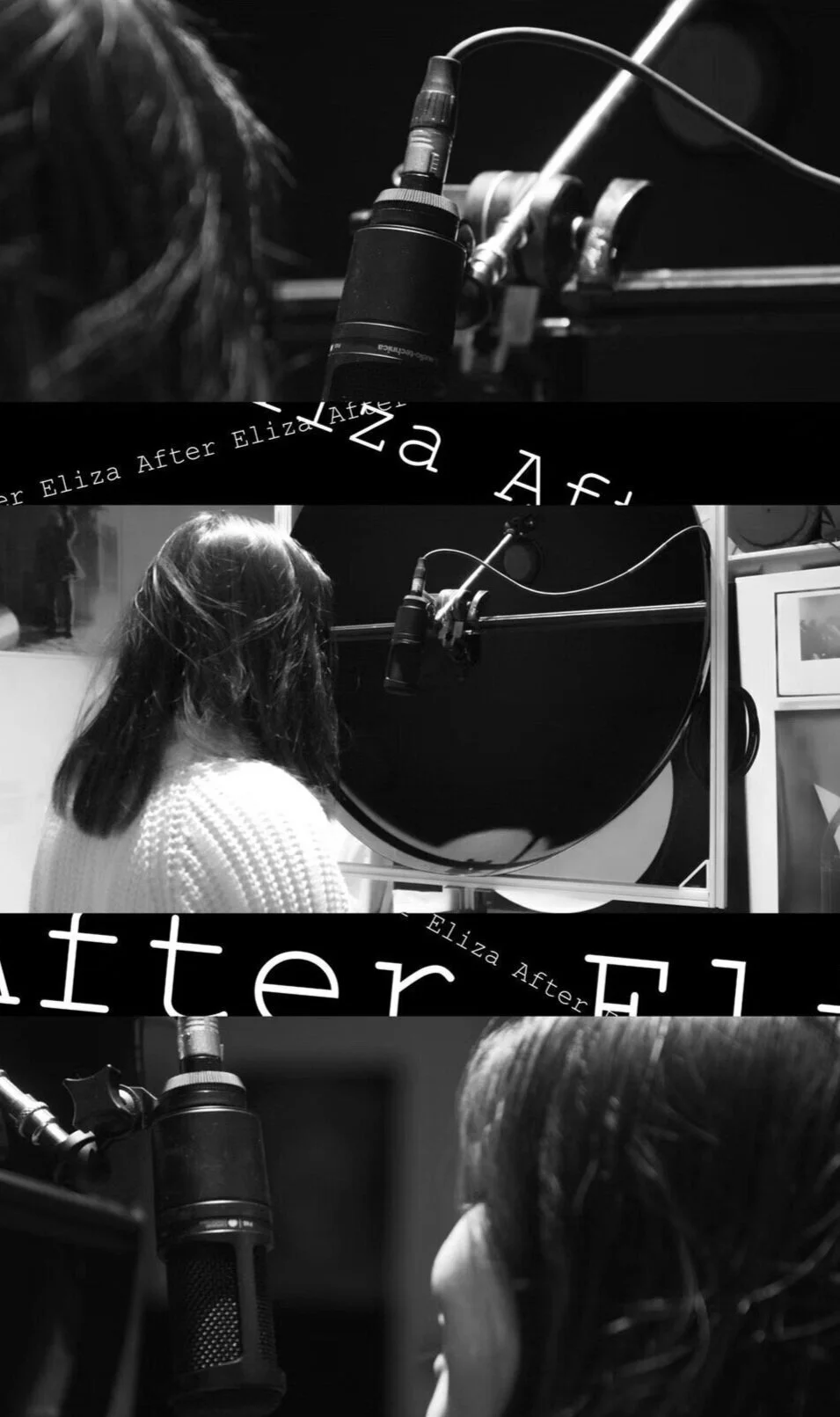
After Eliza
My work explores the possibility of communication between human and machine. At their simplest, machines are tools that execute instructions, but humanity has long dreamed of intelligent machines that could communicate with their creators. In 1966, MIT computer scientists created Eliza, an artificial intelligence system that emulates a Rogerian psychotherapist. 50 years later, After Eliza reflects back on this earliest conversational AI algorithm, and retrospectively amplifies its capacity to echo and even mimic human input.
Our contemporary surroundings are dominated by computationally powerful AI systems that can respond to our behavior and reflect our existence. The power of computation can easily generate recognizable human forms. After Eliza incorporates these advances, and examines their implications for human-machine relationships. As one converses with the piece, After Eliza’s responses may evoke a strangely personal familiarity. The reflection of thoughts and emotions from a patient to a therapist—transference—and from a therapist to a patient—countertransference—is a central to psychotherapy. In each dialogue with After Eliza, the voice itself becomes the medium for manifesting and amplifying this dynamic