
philosophy
Space is not merely functional, but deeply relational. A space cannot be fully understood by isolating a single object, direction, or feature, nor by reducing its influence to a simple cause-and-effect relationship. Instead, Feng Shui reads space as a living field of relationships, where people, objects, architecture, direction, time, atmosphere, and qi continuously shape one another. Stillness and movement, form and flow, enclosure and openness, presence and absence all arise together within the same environment. I approach Feng Shui as a spatial language for observing patterns, tensions, correspondences, and transformations; a way of understanding how a place supports, restricts, unsettles, or restores the people within it.
Yin-Yang, Form and Flow
Yin and Yang describe the fundamental balance between stillness and movement, enclosure and openness, form and flow. This relationship is often expressed through the classical idea of Form and Flow: form refers to mountains, structures, buildings, or forms that gather, protect, and stabilize qi, while flow refers to rivers, roads, pathways, openings, or movement that activates and circulates qi. A balanced environment is not simply “still” or “active,” but one where form and movement support each other. Feng Shui is less about identifying objects by name, and more about understanding the role each feature plays within the energetic pattern of an environment.
The Five Elements
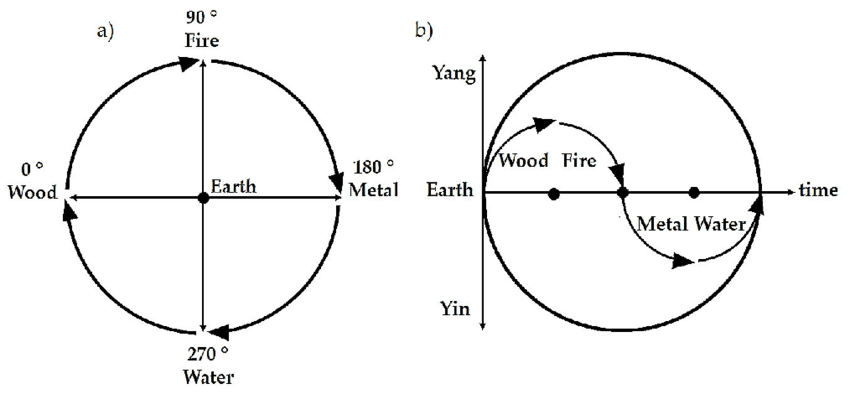
In Feng Shui, the Five Elements describe the different qualities of qi, or energy, within a space. They form a symbolic language for reading balance, tension, and support within an environment. In Feng Shui, they help interpret how a space feels, how it affects the people within it, and what adjustments may bring greater harmony.
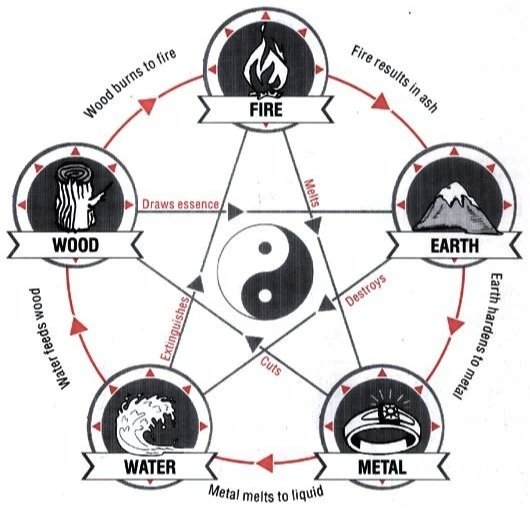
The Five Elements are also closely connected to the four seasons and the changing balance of Yin and Yang. Understanding the Five Elements through the seasons allows Feng Shui to read how a space changes throughout the year, where light, temperature, movement, moisture, stillness, or activity may shift with time, and how these seasonal changes affect the feeling and balance of a space.
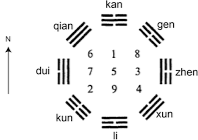
The Eight Trigrams
The Eight Trigrams are used in Feng Shui to query the energy of space. Each direction carries a specific trigram and a network of correspondences, including element, season, family relationship, body symbolism, and patterns of qi. Missing corners, extended corners, irregular forms, and highly active features such as entrances, bathrooms, kitchens, stoves, stairways, and major pathways may all influence how qi is gathered, activated, drained, or transformed in a particular palace.
The Four Guardians
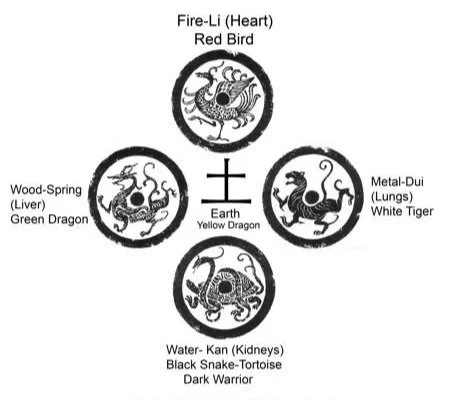
The Four Guardians are a popular way that Feng Shui reads the outer form of a home. They describe how a building is held by its surrounding environment. The balance or imbalance of these four forms can reveal how a space affects its occupants.
The Four Guardians are often combined together with the Eight Trigrams and the principles of Form and Flow when reading a space. Adjustments can be made with form, objects, placement, color, material, and movement to bring the environment back into balance.
Birth-charts and the Zodiacs
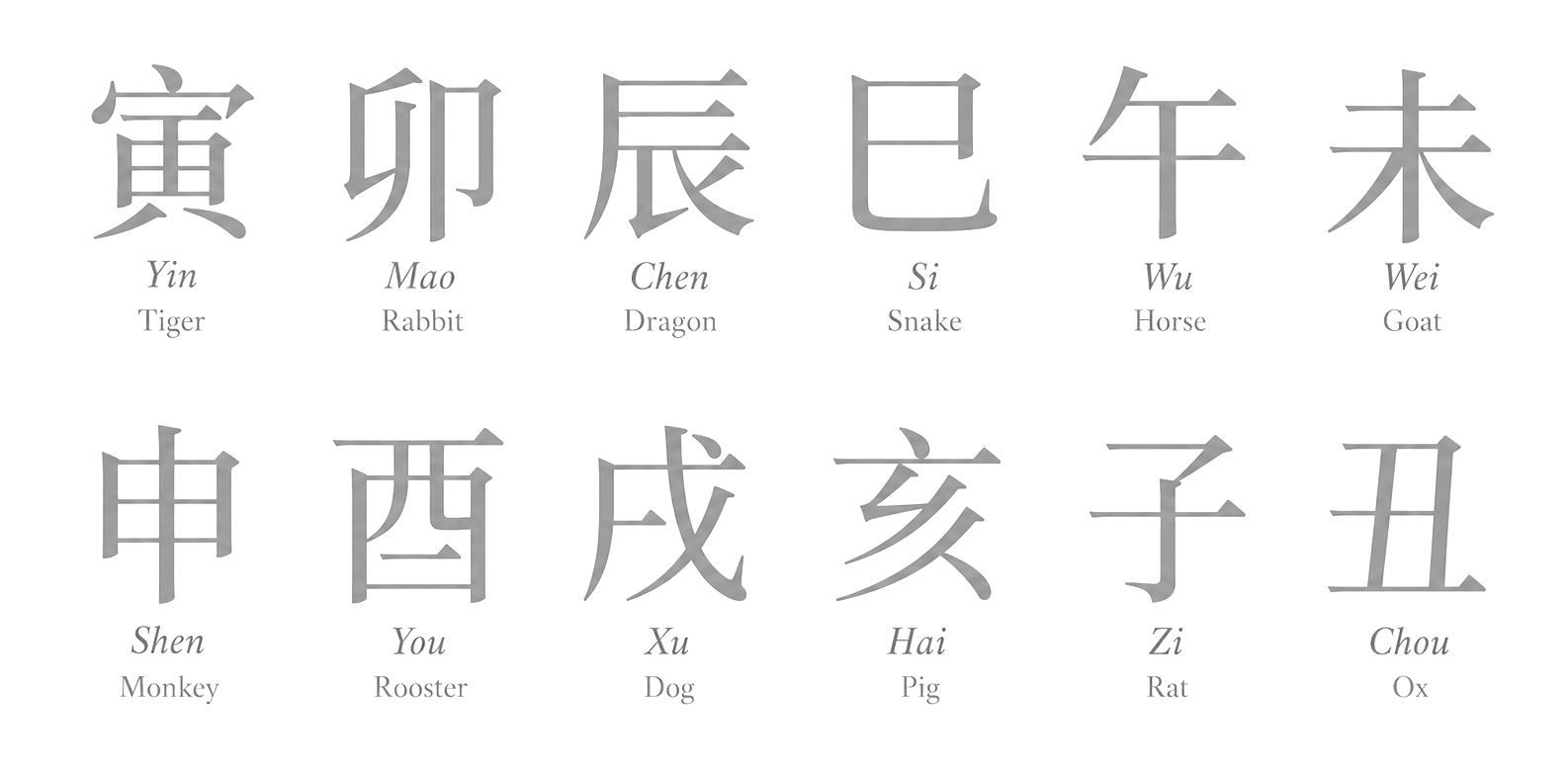
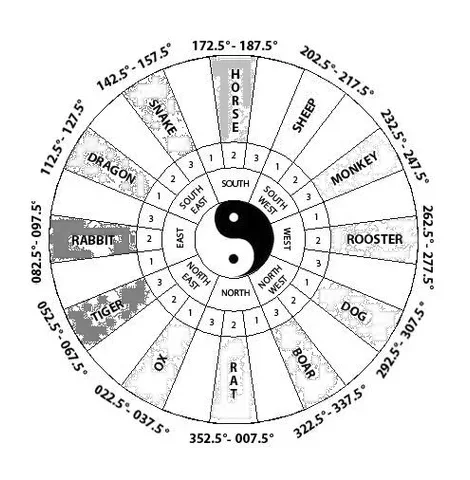
The Chinese zodiac is not only used to describe personal birth signs, but also to understand the movement of time and its relationship to space. Each year carries a specific Earthly Branch, which activates a corresponding direction. This becomes especially important when functional areas fall into these yearly directions. This allows adjustments to be made more precisely with space-time.
Feng Shui is not about controlling space, but learning to listen to it.
It offers a way to understand how space can hold, challenge, and restore the people within it.
Contact
I am based in the San Francisco Bay Area and serving clients across the entire United States. Many consultations can be done remotely so I can work with your home wherever you are. I also travel for in-person visits.